
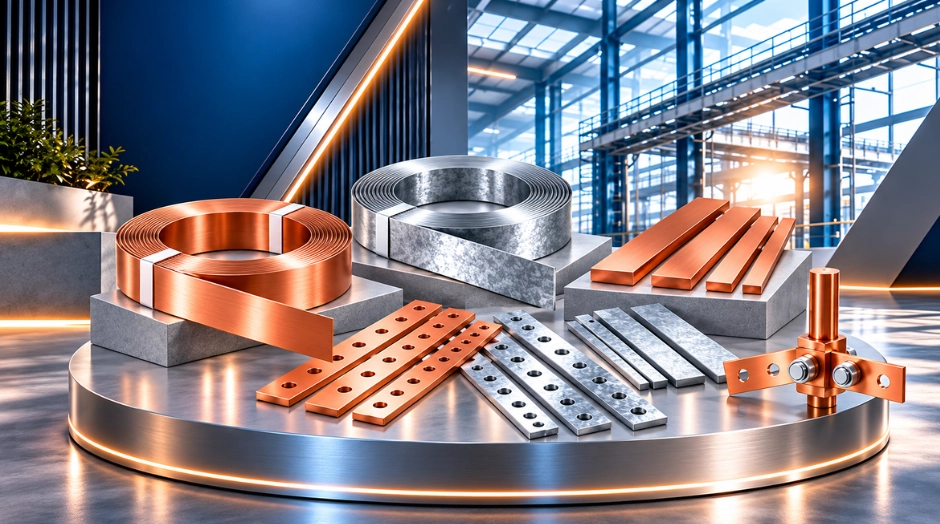
Earthing Strips
Earthing Strips for Effective Electrical Grounding
Earthing strips are used in electrical grounding systems to provide a conductive path between electrical equipment and the earthing network. They help carry fault current safely towards the ground and are commonly used in industrial plants, commercial buildings, electrical substations and infrastructure projects.
Engineered for performance
Product Specifications
Earthing strips are available in different materials, thicknesses and widths to meet the requirements of electrical grounding installations.
Raw Material
- GI
- MS
- Copper
Surface Finish
- Hot-Dip Galvanized
- Electroplated
- Plain Copper
Material Forms
- Galvanized Iron Strips
- Mild Steel Strips
- Copper Strips
Features
Key Advantages of Earthing Strips
Earthing strips are an important part of grounding networks and help maintain proper electrical connections across installations.
Electrical Conductivity
Corrosion Protection
Multiple Material Options
Flexible Installation
Easy Fabrication
Wide Applications
Product Range
Custom sizes can be manufactured on request
| Width | Thickness | Length |
|---|---|---|
| 25 | 3 / 5 / 6 / 8 / 10 | 5000 TO 6000 MM AVERAGE. |
| 32 | ||
| 40 | ||
| 50 | ||
| 65 | ||
| 75 | ||
| 100 |
*All dimensions are in MM
** All sizes are standard, but custom sizes can be manufactured
Earthing Plates
| Specification | Available Options |
|---|---|
| Shape | Flat Strip |
| Size | Different Widths and Thicknesses as per Requirement |
| Application | Electrical Earthing and Grounding Systems |
Frequently Asked Questions
Earthing strips are used to connect electrical equipment and grounding points to an earthing network.
Earthing strips are commonly available in GI, mild steel and copper.
Common finishes include hot-dip galvanizing, electroplating and plain copper, depending on the material.
They are used in industrial facilities, commercial buildings, electrical substations and power distribution installations.
The selection depends on the electrical design, fault current requirements, material and applicable earthing standards.
GI strips are galvanized steel strips, while copper strips offer higher electrical conductivity. The suitable option depends on the installation design and project requirements.