
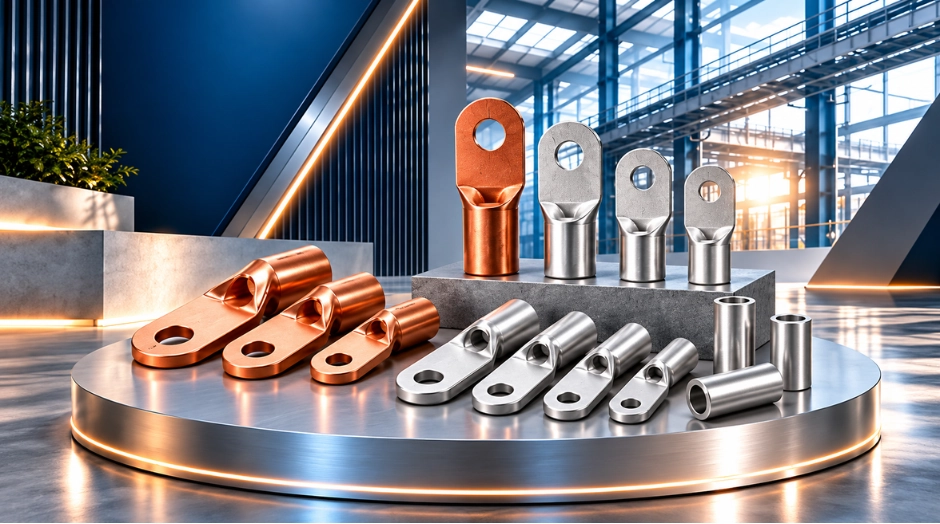
Cable Lugs
Cable Lugs for Secure & Reliable Electrical Connections
Cable lugs are used to connect electrical cables to terminals, switches, panels, busbars and other electrical equipment. They provide a reliable connection between the cable and the electrical component. Available in different materials, sizes and designs to suit various electrical and industrial applications.
Engineered for performance
Product Specifications
Cable lugs are available in different materials and connection types to meet installation and electrical requirements.
Raw Material
- Copper
- Aluminium
- Tinned Copper
Surface Finish
- Plain Copper
- Tin Plated
- Aluminium Finish
Flange Options
- Ring Type
- Pin Type
- Fork Type
- Tubular Type
Features
Key Advantages of Perforated Cable Trays
Perforated cable trays ensure efficient cable management with excellent ventilation, durability, easy installation, and flexibility for future expansion.
Reliable Electrical Connection
Multiple Material
Options
Different Connection Types
Strong Cable Termination
Easy Installation
Wide Application Range
Product Range
Available Sizes & Specifications
| Specification | Available Options |
|---|---|
| Material | Copper, Aluminium, Tinned Copper |
| Cable Size | As per cable cross-section |
| Finish | Plain, Tin Plated |
| Connection Type | Crimping / Suitable termination |
| Application | Electrical Panels, Switchgear, Busbars, Power Distribution |
Frequently Asked Questions
Cable lugs are used to connect electrical cables to terminals, busbars, switches, panels and other electrical equipment.
Cable lugs are commonly available in copper, aluminium and tinned copper, depending on the application.
Common types include ring type, pin type, fork type and tubular cable lugs.
Copper lugs are commonly used with copper cables, while aluminium lugs are designed for aluminium cables. The correct lug material and connection compatibility should always be checked.